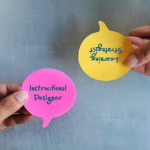
There’s a noticeable shift happening in Learning and Development right now.
For years, many L&D teams were overwhelmed with requests for more content:
- More courses
- More videos
- More onboarding
- More compliance training
- More microlearning
And for a long time, creating that content took significant time, resources, and specialized expertise. But AI is changing that.
Today, organizations can generate training content faster than ever before. AI tools can draft outlines, write scripts, create quizzes, summarize documents, and even generate voiceover and video content in minutes. That doesn’t mean the content is always good, but it does mean the bottleneck is no longer simply content production.
And that’s exactly why performance consulting and skilled performance consultants are becoming important again.
The conversation is now shifting from: “How fast can we build training?” to “Will this actually improve performance?”
That’s a very different discussion.
What Is Performance Consulting?
Performance consulting is an approach that focuses on solving business performance problems, not just creating training.
Instead of immediately assuming employees need a course, a performance consultant looks deeper:
- What business problem are we trying to solve?
- What behavior needs to change?
- What is preventing success today?
- Is training actually the issue?
- How will we measure success?
Sometimes the answer is training. Sometimes it isn’t. The real goal is improving performance outcomes, not simply delivering learning content.
That distinction matters more now than ever.
Why Is Performance Consulting
Becoming More Important with AI?
AI is accelerating content creation dramatically.
Learning and development teams can now produce learning materials at a speed that would have seemed impossible a few years ago. Internal teams are experimenting with AI-generated job aids, chatbot-based support, rapid eLearning, synthetic video, and automated content development workflows.
But faster content creation introduces a new challenge: Just because you can create training quickly doesn’t mean it will solve the problem.
In many situations, the real issues are things like:
- Unclear processes
- Poor manager reinforcement
- Lack of accountability
- Confusing systems
- Workflow friction
- Missing performance support
- Competing priorities
- Inconsistent communication
None of those problems are solved by simply generating another course.
In fact, AI can unintentionally make the problem worse by flooding employees with even more content that may not be relevant, timely, or connected to business outcomes.
That’s where performance consulting comes in.
Performance consultants help organizations slow down long enough to ask: “What actually needs to change for business results to improve?”
AI Is Shifting L&D from Content Creation
to Performance Strategy
One of the biggest themes emerging across corporate learning right now is this:
L&D teams are spending less time creating basic content and more time focusing on:
- Business alignment
- Workflow support
- Measurement
- Behavior change
- Performance enablement
- Strategic consulting
In many ways, AI is pushing Learning and Development back toward its most valuable role: improving organizational performance.
That’s a major shift.
For years, many instructional designers and learning teams became heavily focused on production:
- Building slides
- Formatting courses
- Editing content
- Creating assessments
- Managing development timelines
Those skills still matter. But organizations are increasingly looking for professionals who can connect learning initiatives to operational outcomes.
They want consultants who can ask stronger questions, identify root causes, and help leaders make informed decisions about where training fits and where it doesn’t.
What Does Performance Consulting
Look Like in Practice?
Performance consulting is often less about delivering a course and more about understanding the environment around the work.
For example:
Scenario 1: Sales Training Requests
A company says: “Our sales numbers are down. We need sales training.”
A traditional training response might immediately begin developing courses. A performance consulting approach might ask:
- Has the sales process changed?
- Are managers coaching consistently?
- Are tools slowing sales reps down?
- Are compensation structures aligned?
- Do reps understand the messaging?
- Where in the funnel are deals being lost?
The final solution may include training, but it could also involve process improvements, manager coaching tools, updated systems, or performance support resources.
Scenario 2: New Software Rollout
A company requests: “We need training for this new system.”
But performance consulting may uncover:
- Employees only use three core tasks regularly
- Most errors happen because workflows changed
- Employees forget steps after training
- Supervisors are using different processes
Instead of a large standalone course, the solution might include:
- Embedded workflow support
- Short task-based videos
- Searchable job aids
- Manager reinforcement
- Contextual AI support tools
The focus becomes helping people perform effectively in the moment of need.
Why This Matters for Learning Leaders
Learning leaders are under growing pressure to demonstrate business value. Executives increasingly want answers to questions like:
- Did performance improve?
- Did adoption increase?
- Did errors decrease?
- Did onboarding accelerate?
- Did customer satisfaction improve?
- Did behavior actually change?
Completion rates and smile sheets alone are no longer enough. Performance consulting helps connect learning initiatives to measurable outcomes. It also helps organizations avoid investing time and money into training that was never going to solve the problem in the first place.
What Skills Are Becoming More Valuable?
As AI handles more production work, the value of human expertise shifts upward. The most valuable Learning and Development professionals are increasingly those who can:
- Diagnose performance problems
- Facilitate stakeholder conversations
- Align learning to business goals
- Design performance support ecosystems
- Analyze workflow challenges
- Identify behavioral barriers
- Measure business impact
- Guide organizational change
In other words, strategic thinking is becoming more important than simply producing content quickly. That doesn’t mean instructional design disappears. It means instructional design becomes part of a broader performance-focused strategy.
Is Performance Consulting
Replacing Instructional Design?
No. Strong instructional design is still essential. But instructional design alone is not always enough. The organizations seeing the best results are combining:
- Instructional design
- Performance consulting
- Workflow support
- Change management
- Data analysis
- AI-enabled tools
- Manager enablement
The future of L&D is becoming more integrated, strategic, and performance-focused.
Final Thoughts
AI is changing corporate learning rapidly, but not in the way many people expected. The biggest shift may not be how quickly we create content. It may be the growing realization that content alone was never the real goal.
Organizations don’t ultimately want courses. They want:
- Better performance
- Faster adoption
- Stronger leadership
- Improved productivity
- Better customer experiences
- Measurable business outcomes
That’s why performance consulting is back in focus.
And as AI continues reshaping how learning content is created, the ability to connect learning to real-world performance may become one of the most valuable skills in Learning and Development.
Creating Performance & Learning Objectives That Drive Results
Ready to Work with Us?
Does your L&D team have more projects than people?
Many organizations in this position turn to custom eLearning development to scale training without overloading internal teams. If you’re exploring options or comparing eLearning development companies, you should learn more about how organizations design and scale these solutions.
TrainingPros is a learning and development company that connects organizations with experienced instructional designers, eLearning developers, and performance consultants. We’ve been named a Top 20 Staffing Company by Training Industry and a Champion of Learning by the Association for Talent Development (ATD), recognition that reflects our commitment to delivering high-quality, tailored learning solutions.
If your learning initiatives require additional support, whether for a single project or a large-scale rollout, our relationship managers can help you find the right expertise quickly and confidently.
When you have more projects than people™, let TrainingPros find the right consultant to start your project with confidence.
Frequently Asked Questions About
Performance Consulting and AI
What is performance consulting in Learning and Development?
Performance consulting is an approach that focuses on improving business outcomes and employee performance rather than automatically recommending training. It involves identifying root causes, barriers, and performance gaps before deciding on solutions.
Why is performance consulting becoming more important with AI?
AI makes it easier and faster to create learning content. Because content production is no longer the primary challenge, organizations are placing greater emphasis on solving actual performance problems and measuring business impact.
Is performance consulting the same as instructional design?
No. Instructional design focuses on creating effective learning experiences. Performance consulting takes a broader view by evaluating whether training is the right solution and identifying other factors affecting performance.
Can AI replace performance consultants?
AI can assist with content creation, analysis, and support tools, but performance consulting still requires human judgment, business alignment, stakeholder facilitation, and strategic decision-making.
What kinds of problems does performance consulting solve?
Performance consulting can help address issues related to onboarding, leadership development, sales enablement, technology adoption, operational efficiency, customer service, compliance, and organizational change.
Does performance consulting always include training?
No. Sometimes training is part of the solution, but performance consulting may also recommend workflow improvements, manager coaching, job aids, system changes, communication strategies, or performance support tools.
How does performance consulting support business goals?
Performance consulting aligns learning initiatives with measurable outcomes such as increased productivity, reduced errors, faster onboarding, improved adoption, stronger customer experiences, or higher sales performance.
What skills are important for performance consultants?
Important skills include stakeholder consulting, business alignment, data analysis, workflow evaluation, communication, problem-solving, change management, and understanding how people apply learning on the job.
- 0share
- LinkedIn0
- Twitter0
- Facebook0
- Love This0