Quick Answer:
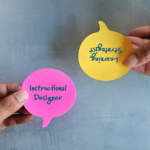
A custom eLearning development team typically includes an instructional designer, eLearning developer, subject matter expert (SME), and project manager. Depending on the project’s complexity, additional specialists may include a learning strategist, graphic designer, multimedia developer, quality assurance tester, or learning management system (LMS) administrator. The right team depends on the learning objectives, audience, technology, timeline, and available internal resources. One experienced professional may handle several responsibilities, while larger initiatives often benefit from specialists.
What Roles Are Needed on a Custom eLearning Development Team?
When an organization decides to develop custom eLearning, one of the first questions is often, “Who do we need to make this happen?” The answer depends on what you’re building.
A 15-minute compliance eLearning refresher might require only an instructional designer who also develops eLearning, along with a subject matter expert. A company-wide leadership development program involving simulations, video, interactive scenarios, and multiple languages could require a much larger team.
Understanding the different roles helps L&D leaders plan resources, establish realistic timelines, and identify where they may need additional expertise.
Here are the roles commonly involved in custom eLearning development.
1. Instructional Designer: How Will People Learn?
The instructional designer (ID) determines how content should be organized and presented to support learning and performance. Responsibilities often include:
- Analyzing learner needs and performance objectives
- Working with SMEs to identify essential content
- Designing instructional approaches and activities
- Developing storyboards, scripts, and assessments
- Ensuring the learning experience supports the desired outcomes
Experienced instructional designers also help stakeholders make decisions about what belongs in the course and what might be better addressed through other performance support resources.
When is this role needed? Every custom eLearning project benefits from instructional design expertise, even when the course is relatively simple.
2. eLearning Developer: How Will the Experience Be Built?
The eLearning developer transforms instructional designs into functional digital learning experiences.
Using authoring tools such as Articulate Storyline, Rise, Adobe Captivate, or other development platforms, this professional builds the course and its interactions.
Responsibilities may include:
- Developing interactive course content
- Programming branching scenarios and simulations
- Integrating audio, video, animation, and graphics
- Building assessments and feedback
- Preparing courses for LMS delivery
- Troubleshooting technical issues
Some professionals are skilled in both instructional design and eLearning development. Others specialize in the technical aspects of development.
When is this role needed? Whenever a project requires a custom digital learning product. The complexity of the experience determines the level of development expertise required.
3. Subject Matter Expert: What Must Learners Know or Do?
Subject matter experts provide the knowledge needed to ensure the content is accurate, relevant, and applicable to the work. SMEs are usually internal employees who understand the organization’s processes, products, policies, or technical requirements. Their responsibilities include validating content, explaining real-world situations, identifying common mistakes, and reviewing the accuracy of learning materials.
One common challenge is SME availability. Even an excellent development team can experience delays when critical reviewers cannot provide timely feedback.
When is this role needed? Every project needs access to reliable subject matter expertise, although the SME is not necessarily a dedicated member of the development team.

Streamline Your SME Review Process
4. Project Manager: How Will Everything Stay on Track?
Custom eLearning development often involves multiple stakeholders, deliverables, review cycles, and dependencies. A project manager coordinates the work and keeps the initiative moving.
Responsibilities may include:
- Managing schedules, milestones, and deliverables
- Coordinating team members and stakeholder reviews
- Monitoring budgets and resources
- Managing scope changes
- Identifying risks and resolving obstacles
For smaller projects, an instructional designer or development lead may handle project coordination. Larger initiatives benefit from dedicated project management, particularly when multiple courses or development teams are involved.
When is this role needed? Project management responsibilities exist on every project, but a dedicated project manager is most valuable when complexity, volume, or stakeholder coordination increases.
Which Specialized Roles Might an eLearning Project Require?
Beyond the core team, some projects need additional expertise.
|
Role
|
When the Role Adds Value
|
Learning Strategist |
When the project must align with a broader business or workforce capability strategy
|
|---|---|
Graphic Designer |
When custom visuals, branded interfaces, or sophisticated visual communication are needed
|
Multimedia Developer |
When the experience includes custom video, animation, audio, or motion graphics
|
Quality Assurance Tester |
When complex interactions, accessibility, device compatibility, or technical functionality require extensive testing
|
LMS Administrator |
When courses require configuration, publishing, testing, tracking, or reporting within the organization's LMS
|
Accessibility Specialist |
When specialized expertise is needed to meet accessibility standards and requirements
|
These roles do not necessarily require separate full-time team members. Some capabilities may already exist within the organization, while others can be brought in for specific phases of the project.
Can One Person Handle Both Instructional Design and eLearning Development?
Yes. Many experienced eLearning professionals are capable of designing and developing a complete course. This approach can work particularly well for smaller projects, straightforward interactions, and organizations with limited development resources.
However, as projects become more complex, separating instructional design from development may improve efficiency.
For example, an instructional designer can begin storyboarding the next module while an eLearning developer builds the first. Parallel work becomes particularly valuable when organizations need to develop multiple courses under tight deadlines.
The decision should be based on the complexity and volume of work, along with the capabilities of the professionals involved.
How Do You Determine the Right Team Size?
Rather than starting with a predetermined number of people, begin with the project’s requirements.
Consider five questions:
- How much content are we developing? A single course has different staffing needs than a 20-course curriculum.
- How complex is the learning experience? Video, simulations, branching scenarios, and custom interactions require different capabilities.
- What is the timeline? Compressed schedules may require additional resources working simultaneously.
- What expertise already exists internally? Your team may have strong instructional design capabilities but limited multimedia development capacity.
- Who will manage reviews and approvals? Multiple stakeholders and lengthy approval processes can significantly affect the schedule.
These questions help identify both the required skills and the amount of capacity needed.
Should You Build an Internal Team or Use Contract eLearning Professionals?
Many organizations use a combination of internal employees and contract professionals. Internal L&D teams often provide organizational knowledge, stakeholder relationships, and strategic direction. Contract professionals can contribute specialized skills or additional capacity during periods of increased demand.
For example, an organization might have instructional designers on staff but need three additional eLearning developers for a six-month rollout. Another might have strong technical developers but need an experienced instructional designer to structure a complex learning experience.
Contract staffing also allows organizations to adjust resources as the project moves through design, development, testing, and deployment. The important consideration is identifying which capabilities are needed, when they are needed, and for how long.
What Makes a Custom eLearning Development Team Successful?
Having the right technical skills matters, but successful projects also depend on how well the team works together. Clear responsibilities, agreed-upon deliverables, accessible SMEs, realistic schedules, and defined review processes all contribute to successful development. It’s also important to establish who has authority to make decisions about scope, content, design, and final approval.
A well-structured team allows each professional to contribute their expertise while maintaining a shared focus on the desired learning and business outcomes.
What to Read Next:
Do you want to learn more about custom eLearning development? These articles continue the conversation.



Working Successfully with Contract L&D Professionals
Ready to Work with Us?
Does your L&D team have more projects than people?
Many organizations in this position turn to custom eLearning development to scale training without overloading internal teams. If you’re exploring options or comparing eLearning development companies, you should learn more about how organizations design and scale these solutions.
TrainingPros is a learning and development company that connects organizations with experienced instructional designers, eLearning developers, and performance consultants. We’ve been named a Top 20 Staffing Company by Training Industry and a Champion of Learning by the Association for Talent Development (ATD), recognition that reflects our commitment to delivering high-quality, tailored learning solutions. To hear ongoing conversations with senior learning leaders, listen to our Learning Leader Spotlight podcast: Apple | Spotify | YouTube
If your learning initiatives require additional support, whether for a single project or a large-scale rollout, our relationship managers can help you find the right expertise quickly and confidently.
When you have more projects than people™, let TrainingPros find the right consultant to start your project with confidence.
- 0share
- LinkedIn0
- Twitter0
- Facebook0
- Love This0